Information Literacy, Technology, and Digital Media

Image description: Media Literacy infographic (Firth, n.d.).
Information and media literacy are the frameworks in which an individual successfully navigates information and media by evaluating sources, creating content, and using information ethically, effectively, and safely. In a technological and digital world, the need for this skill has skyrocketed. Because school librarians are information professionals, a monumental task has been entrusted to them in educating young generations on information and media literacy, especially in an online context.
In Joyce Valenza's SJL blog post "Truth, Truthiness, Triangulation: A News Literacy Toolkit for a 'Post-Truth' World," she covers some of the blind spots students sometimes possess when evaluating information, among other topics, such as not noticing the author of a piece of media being politically or financially motivated to create it, or trusting a source too quickly because of a .org URL. If a school librarian is aware of media mistakes students often make, they are able to tailor lessons to address them.
Check out this engaging and insightful episode of the podcast The Liturgists titled "Fake News & Media Literacy" (2017). In an interview with Clay Johnson, author of The Information Diet, he shared a humorous rap song with host Michael Gungor on his five questions when evaluating a source:
Warning: expletives implied.
2. Who published it? Do they have an editorial review board?
3. There's a date you see?
4. Gonna cite that source?
5. This ***** can't write, so you better make it right and say "it's fake."
In plainer English, Johnson's five questions are:
1. Who wrote or authored this?
3. Is there a date?
5. Is there proper grammar and spelling?
In an information-saturated world, it can be a lot to ask of someone to always evaluate every single source, especially when casually browsing. However, these are very simple flags to look out for when reading an article or watching a news story. Also, the reasonings behind some of these questions are very clever. For example, Johnson says to check for a date because fake news articles often do not include one in order to later present it as just happening, extending the lifespan of the fake article to be used again and again to incite anger, fear, and other negative emotions. Also, Johnson interestingly points out that another thing to vigilant of is politicians and other entities weaponizing the concept of fake news by accusing actual news of being fake.
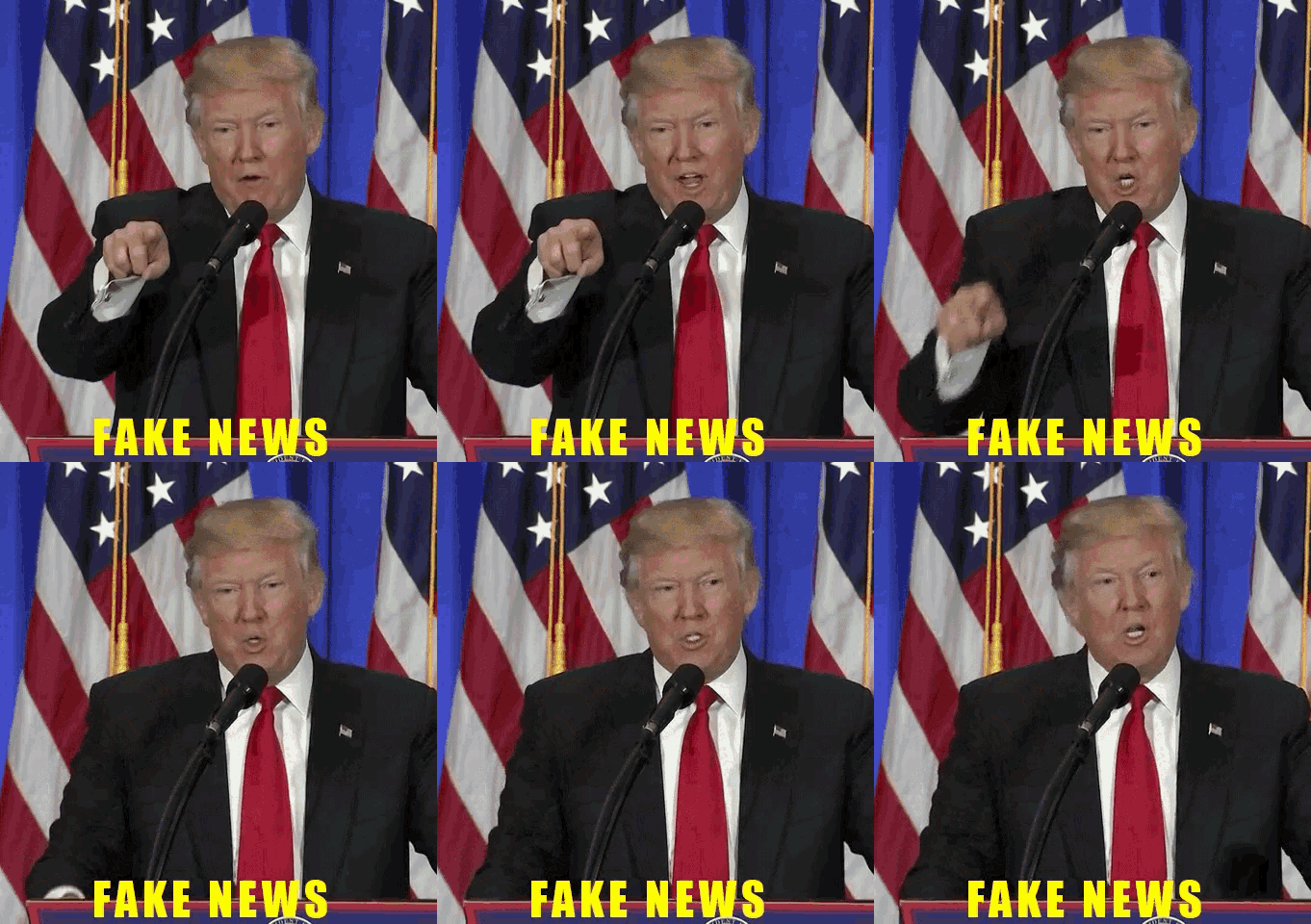
GIF description: Trump pointing with text "Fake News."
Personally, I consume a lot of Associated Press news articles, articles posted on social media, and YouTube video essays. I would like to believe I am diligent in not falling for misinformation, but I know I am not impervious to it.
Because a school librarian is a beacon of information literacy, their media diet should be comprehensive and intentional, designed to keep them aware of trends in media and technology to better serve students, staff, and the school community. Some examples of what school librarians should have a balanced intake and curation of include:
1. Professional journals and publications
2. Resources on media and technology use
3. Resources on information and media literacy
4. Student trends and interests on social media
5. Student trends and interests in literature
6. Current events
References
Firth, S. (n.d.). Exploring media literacy [Infographic]. Retrieved from moadoph.gov.au/learn/activities-and-resources/exploring-media-literacy.
Gungor, M. (Host). (2017). Fake news & media literacy (No. 54) [Audio podcast episode]. In The Liturgists. open.spotify.com/show/6iy3jgon8P9aGOkTdKZcfj.
MoAD. (n.d.). Exploring media literacy: Introduce students to the importance of being media literate citizens. Museum of Australian Democracy at Old Parliament House. Retrieved from moadoph.gov.au/learn/activities-and-resources/exploring-media-literacy.
Valenza, J. (2016). Truth, truthiness, and triangulation: A news literacy toolkit for a "post-truth" world [Blog post]. School Library Journal. Retrieved from blogs.slj.com/neverendingsearch/2016/11/26/truth-truthiness-triangulation-and-the-librarian-way-a-news-literacy-toolkit-for-a-post-truth-world/
Comments
Post a Comment